
We repair and replace standing seam metal roofs across Los Angeles. We check the damage before recommending repair or replacement. If you want to switch to metal, we also need to assess whether it suits your building.
Repair, full replacement, and a change of covering start from the same details. Tell us where the building is and what you see on the roof. Call (323) 616-1483 and the estimate is free.
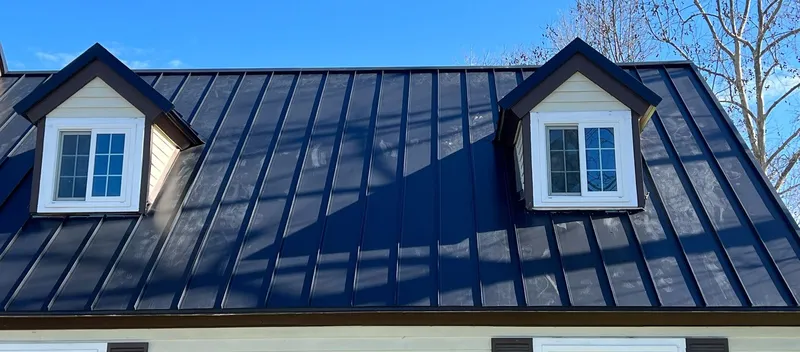
Standing-seam metal roof work
We work in standing seam, a system of metal panels joined by raised, concealed-fastener seams. Our standing seam work covers residential and commercial buildings, and it falls into three kinds of request.
Repair on an existing metal roof covers leaks and flashing work. The other two are a full replacement and a change from your current covering to metal.
What you see from the ground or inside the building gives us a starting point. A ceiling stain, a drip during rain, or a gap at a wall all help. None of that settles the cause on its own.
A re-roof is a bigger job than a patch, and we take on full roof replacement too. Whether standing seam suits your building stays a separate question from job size.
A change of material brings its own questions about how new panels would meet the existing roof. Panel layout, roof transitions, and what sits under the current covering all affect whether standing seam fits.
Flashing can come into any of the three requests, whatever the size of the job. Flashing is the metal that seals roof-to-wall, chimney, and valley transitions on a roof. Those transitions and the panel seams matter on a repair and on a re-roof alike.
Assess the existing roof and transitions
The roof you have now shapes any metal project. What sits under the covering counts as much as the surface above.
Roof geometry decides how many transitions a roof carries, and valleys, walls, and chimneys each need flashing. A roof with more of those points carries more flashing detail inside the scope of the job.
The flashing already on the roof gets attention too, whichever direction the project goes. When a metal roof leaks, the seams and the transition flashing are among the things we ask about. When a roof may become metal, we look at what those same transitions would need.
The deck sits under the covering, and its condition affects the work. Rot in the deck changes the job regardless of which covering goes back on top.
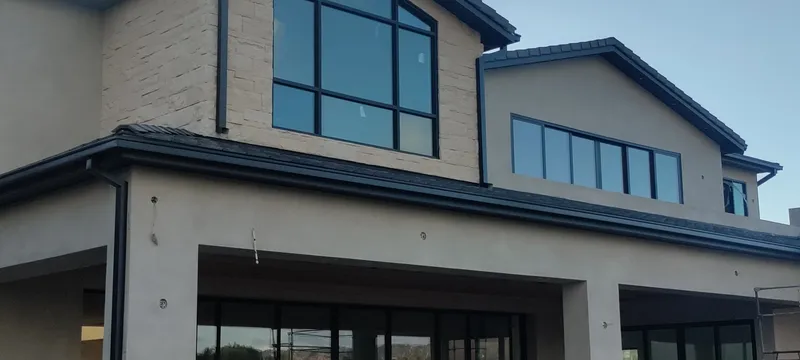
Repair or replacement planning
Repair and replacement answer different problems, and no single symptom decides between them. A handful of concrete details set the size of either job, and these are the ones we ask about.
A leak or a flashing problem on a metal roof belongs under roof repair, whatever its size. Small jobs sit inside that same category, and we take them alongside larger work.
We help property owners pull the roofing permit the city or another authority with jurisdiction requires. Whether your project needs one depends on the work and on the authority involved.
Call (323) 616-1483 when you want the job priced out.
- How much roof area the job covers
- The number of stories on the building
- The pitch, or slope, of the roof surface
- Whether rot sits under the existing covering
- How many layers of covering already sit on the deck
Compare metal with the current covering
The tradeoffs between metal and your current covering depend on the project. That covering might be tile, shingle, or a cap sheet. Each one changes what a switch to metal involves.
A cap sheet is the granulated top layer of a built-up or modified-bitumen roof. We can replace this covering with metal, or remove tile and install metal instead. Those jobs involve different work, so we estimate each one separately.
For a building near the coast, salt and moisture make corrosion resistance a serious selection question. A manufacturer's guide to metal roofing in coastal areas explains why that choice depends on the site.
Where the building sits shapes the choice, and so does the exposure at that site. Warranty terms matter too, and steel products may carry shoreline-related limits. Read the terms for the product proposed for your roof, not for metal in general.
Los Angeles publishes green-building and sustainability information you can check against the product proposed.
A change of covering can also mean a tear-off, which means stripping to the deck. That is different from overlaying a new covering on the old one.
If your current roof is tile
A switch to metal is not the only path for a leaking tile roof. When the underlayment under the tile has failed, the tile itself may still be sound.
That work is tile roof underlayment replacement, also called lift and relay. We lift the tile in sections, strip the failed underlayment, replace rotted sheathing, and lay new underlayment. Original tile goes back on top when its condition and suitability allow.
Taking tile off and restacking it adds to the scope of that job. Not every leaking tile roof needs this work.
Request a scoped estimate
Call (323) 616-1483 and tell us the address, what you are seeing, and what you want done. The estimate itself is free, while a detailed roof inspection or written report is a separate paid service.
Plans and photos help when you already have them on hand. Share what you have, along with the location and the problem you have observed. We may come back to you for more detail after that.
Use our contact us page to send the details if you would rather write than call. We cover Los Angeles and the cities listed under service areas.
An estimate covers the work we can identify at the time. If removing the covering reveals hidden damage, additional repairs may be needed.
Metal roofing questions
What is the biggest problem with metal roofs?
The main concern depends on the metal product and where the building sits. Near the coast, salt and moisture make corrosion resistance a key factor. Check the proposed product’s warranty too, since steel can carry limits on how close it sits to the shore.
How much is 1000 sq ft of metal roofing?
Area alone cannot establish an installed metal-roof price. Standing-seam work also depends on existing layers, deck condition and flashing at valleys, walls and chimneys. Ask for a scoped estimate covering those details, including any change from your current roofing material.
What does a roof inspection include?
A roof condition review looks at the covering and its transitions. On standing-seam metal, seams and flashing near walls, chimneys and valleys deserve attention when tracing leaks. Tell us about access and any stains or drips you have noticed.
Call (323) 616-1483 with the address and what you can see on the roof. From there we work out the scope with you, and the estimate is free. Standing seam is one part of the roofing work we take on.
We work under CSLB #1112525. Tile Roofing Los Angeles is a division of Home Vision Remodel.
(323) 616-1483