
A tile roof has an underlayment, the waterproof layer beneath the tile. When that hidden layer fails, the tile above it can still look sound.
A lift and relay replaces the underlayment beneath your tiles. We keep the original tiles when they are sound enough to reuse. First, we check which layers need work.
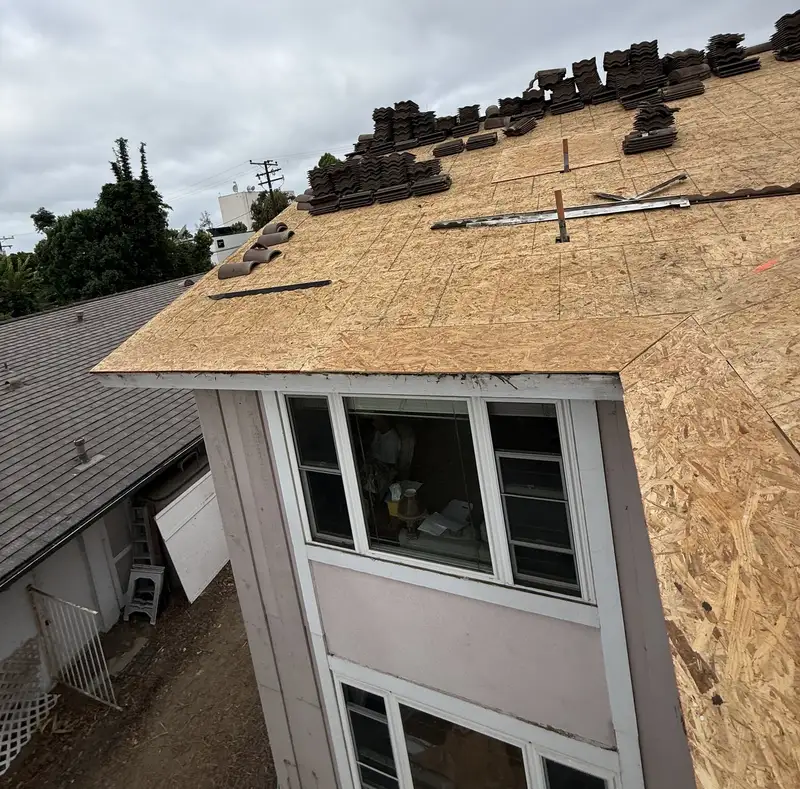
Replacing underlayment beneath roof tiles
Replacing underlayment means lifting the tile away, stripping the old layer to the deck, and laying a new one. Tile goes back on afterward when it is suitable to reuse.
The state of your tile and the state of the underlayment are two separate questions. Clay, concrete, and slate tile can stay intact while the layer beneath gives out. Lifting the tile off in sections is what puts that layer in view.
The underlayment, the decking below it, and the flashing at transitions each have their own condition. A roof that needs new flashing does not automatically need new decking.
A leak by itself does not prove that the whole underlayment has failed. Loose or slipped tile and failed flashing can also let water into a roof. Our roof repair work covers those smaller jobs, including leaks, slipped tile, and flashing.
When lift-and-relay may fit
Lift and relay fits when the underlayment needs replacing and the tile is sound enough to go back on. The tile has to come off in sections and survive that handling in reusable condition. Not every tile roof qualifies.
Reusing the original tile keeps the finished roof looking like the one you already have. We cannot promise how much of the tile can be reused.
Matching becomes a constraint when new tile joins the original covering. The size and profile of a replacement piece matter on clay and concrete roofs. With clay tile, we can look into compatible replacement pieces.
Manufacturing differences, roof age, dirt, and weathering can each affect color matching. An exact match on color or finish is not something we promise.
What the work can include
A relay covers the tile, the underlayment, and the decking under it. We handle residential and commercial tile roofing, in clay, concrete, and slate.
- Section by section, we take the tile down and set it in stacks on site.
- Next we clear the failed underlayment away, leaving the deck bare.
- We inspect the decking below and replace the boards that have rotted.
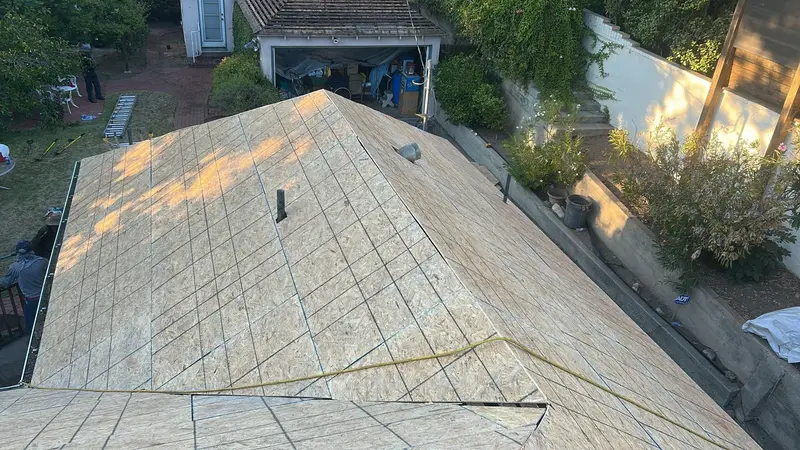
- We lay new underlayment across the deck.
- We restack the original tile wherever its condition makes it suitable to reuse.
Decking and flashing in a relay
Decking, also called sheathing, is the layer of structural boards under the roof covering. With the underlayment stripped away, we replace rotted boards and leave sound decking in place.
We can assess the deck once the old underlayment is off. Before that, we cannot confirm how many boards need repair or replacement.
Flashing is the metal that seals roof-to-wall, chimney, and valley transitions on a tile roof. A relay brings that metal within reach, and flashing work is part of what we handle.
Choosing the new underlayment
There is no single best underlayment for every tile roof. Asphalt felt is one option, and self-adhered underlayments made for tile are another.
Product literature for self-adhered underlayment can name the tile coverings it is made for, such as clay and concrete. That gives you a specific detail to check against the tile on your roof.
The roof slope affects how the underlayment must be installed. Industry guidance explains how the slope relates to the required layers. It also directs installers to the tile maker’s instructions for that roof system.
Attachment matters too. Tile can be set in adhesive foam or mechanically fastened, and product documentation can state which assemblies an underlayment supports. So ask what the proposal says about the assembly and the attachment.
What can change the original scope
The roof itself sets the starting scope, and the deck can change it once the tile comes off. Broken tile counts as well, since only tile in suitable condition goes back on.
- How many squares the roof covers.
- The number of stories the building has.
- The pitch of the roof.
- Whether there is rot under the covering.
- The number of existing layers over the deck.
Tear-off and relay
A tear-off strips the covering to the deck instead of overlaying a new covering on the old. A relay removes the tile and the underlayment, then puts suitable tile back.
The covering already in place changes the scope of the work and what a proposal has to cover. Call (323) 616-1483 for a free estimate.
Permits and city inspections
A relay permit comes from the city, or whichever authority has jurisdiction, and we help you pull it. That authority decides whether your tile work needs a permit at all. Read the city's express permit route yourself before assuming a roofing job qualifies.
The city inspection process applies to work done under a permit. Our detailed roof inspection with a written report is a paid service, apart from the free estimate.
Compare an underlayment proposal
Read an underlayment proposal for two things: what it includes, and what it leaves open. The inclusions should cover tile handling, the new underlayment, and decking repair.
Ask what happens to decking repair if rot turns up, since that is one driver of underlayment replacement cost. The proposal should also settle whether flashing work is included. Then ask about tile that cannot be reused, and how replacement pieces would be matched.
If the tile covering cannot go back on, full roof replacement is the option to weigh. A re-roof replaces the covering rather than resetting the same tile.
Our roofing estimates are free. Call (323) 616-1483 to talk through your tile roof, or send the details through our contact page.
Questions about tile roof underlayment
How much does it cost to replace the underlayment on a tile roof?
The cost depends on roof area, pitch, building height and the work required beneath the tiles. Existing layers, rotted decking, and removing and reinstalling the tile also affect the estimate. We provide free estimates for this roofing work.
What type of underlayment is best for a tile roof?
No single underlayment is best for every tile roof. Selection turns on the roof slope, the tile system, and how the tile is attached. Check the tile manufacturer's installation information and the product documentation for those details.
How do you replace the underlayment on a tile roof?
We lift tile in sections, remove the old underlayment and inspect the exposed deck. We replace rotted sheathing before we lay the new waterproof layer. We then relay the original tile where its condition allows reuse.
If the tile still looks right and water keeps getting in, the layer below is worth checking. Call (323) 616-1483 for a free estimate on underlayment replacement. Our service areas cover Los Angeles along with Culver City, Glendale, Burbank, and other nearby cities.
Tile Roofing Los Angeles is a division of Home Vision Remodel. We work under CSLB #1112525.
(323) 616-1483