
The cost of replacing tile roof underlayment depends on more than roof area. Two roofs of the same size can need different work. Tile handling, deck repairs and removing old layers all affect the cost.
We work on clay, concrete and slate roofs across Los Angeles. Roof height, pitch, tile condition, decking and flashing all affect the work involved. Ask about permits when you discuss the estimate.
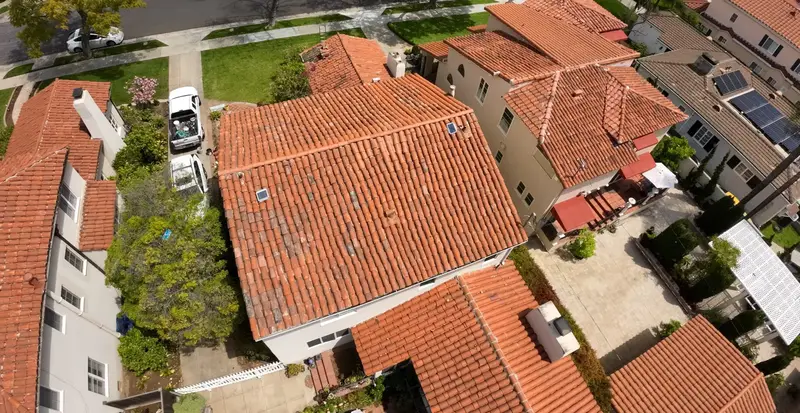
Which job a quote is pricing
Underlayment replacement renews the waterproof layer under your tile and puts suitable tile back on top. The trade name for that work is lift and relay. It is not the same as buying a whole new covering.
The underlayment is the waterproof layer beneath tile or shingle. It sits on the decking, which is the structural boards under the roof covering. The tile you see sits above both.
A full roof replacement, or re-roof, gives you a new covering. Lift and relay keeps the tile you already own and renews what sits under it. Read any quote for which of those two jobs it prices.
A leak does not automatically call for underlayment replacement. We also repair leaks, loose or slipped tile and flashing as their own jobs. What a roof needs depends on what the roof shows.
Reaching the underlayment means opening the roof, so the work runs in a set order.
- Lift the tile off in sections and stack it on site.
- Strip the failed underlayment down to the deck.
- Inspect the sheathing and replace what has rotted.
- Lay new underlayment.
- Restack the original tile.
Access, geometry and work area
Roof area alone does not size this job. Squares of roof area matter, and so do stories, pitch and the layers already in place.
Two proposals can cover the same roof area but include different amounts of work. Compare what each assumes about the existing layers, tile condition and decking beneath the roof.
Part of the roof may not be tile at all. A cap sheet is the granulated top layer of a built-up or modified-bitumen assembly. That is a different covering from tile over underlayment.
If you see a cap sheet on a quote, ask which surface that line covers.
Stories set how high the work sits, and pitch is how steep the roof runs. A scope written for one story covers different work than one written for two. Stories and pitch shape how crews work and how the tile moves off and back on.
Layers work the same way. Tear-off means stripping to the deck rather than overlaying a new covering on the old. Ask what layer count each proposal assumes, and what changes if crews uncover another layer.
Ask each contractor to state the roof area, height, pitch and existing layers used in the estimate. Check those details against the other quotes. A price difference may reflect different assumptions about your roof.
| Driver | What the scope has to account for |
|---|---|
| Squares | The roof area the work covers. |
| Stories | The height the work has to reach. |
| Pitch | The steepness of the roof surface. |
| Existing layers | The layers already on the deck. |
| Rot under the covering | Decking that has to be replaced. |
| Tile off and on | Tile lifted at the start and restacked at the end. |
Where the tile goes while the deck is open
Whether tile has to come off and go back on is a driver by itself. On a lift and relay it does, and crews stack that tile on site.
That stack occupies part of the property while the deck is open. A proposal worth comparing says where that tile goes.
What a proposal assumes about your tile
We reuse the original tile when its condition makes reuse suitable. That call follows inspection of the actual tile, and tile type does not settle it.
We handle the tile twice on this job, once coming off the roof and once going back on. That handling sits inside the scope of the work.
Proposals can assume different things about reuse. One may scope the work around putting your existing tile back on. Another may allow for replacement pieces, and those are different scopes to compare.
Tile that cannot go back needs replacement pieces, and that changes the scope. A useful proposal says how it handles those pieces, and what happens when a close match is unavailable.
Neither assumption is wrong on its own. What matters is which one your proposal states, and how that holds up once the tile comes off.
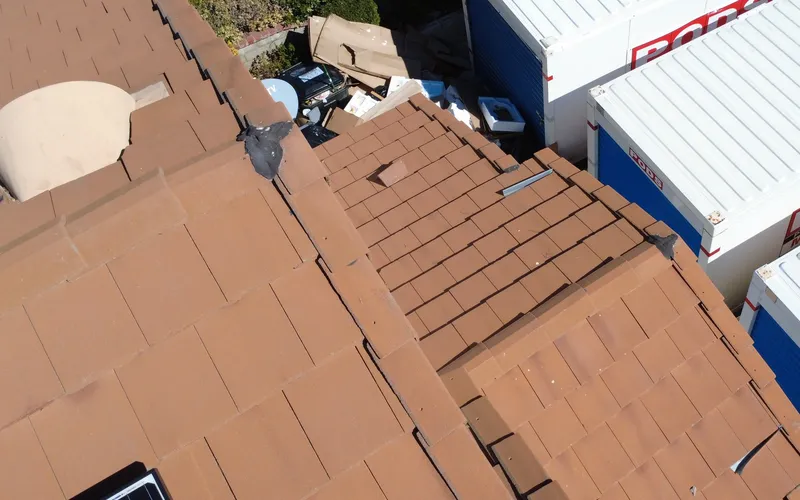
Included work and contingency work
Decking sits under the old underlayment, and flashing seals the transitions on a roof. A proposal can include work on either one, or hold it as a contingency, and yours should say which.
The decking, also called sheathing, is the structural boards under the roof covering. Our work includes inspecting that sheathing and replacing what has rotted. The order puts that inspection before new underlayment goes down.
Rotted decking adds repair work to an underlayment project. We inspect the sheathing after lifting the tiles and removing the old underlayment, when the wood beneath it becomes visible.
Two questions separate included work from a contingency. Ask what the proposal covers if the sheathing turns out sound. Then ask what finding would change that scope, and who approves the change before crews continue.
A proposal priced for sound sheathing tells you what you are buying today. Its contingency wording tells you what happens if crews find rot instead.
Call (323) 616-1483 to ask what our free estimate would cover on your tile roof.
Flashing at the transitions
Flashing is the metal that seals roof-to-wall, chimney and valley transitions. A quote for underlayment work does not automatically speak to the metal at those points.
Check whether your underlayment proposal covers flashing at those transitions. A flashing repair and an underlayment replacement are different jobs, so say which one you want quoted.
Los Angeles review questions
Confirm which authority reviews your project before you compare permit answers. The city's step-by-step project guide asks you to verify that your property sits inside the city.
It also identifies resources for finding the authority responsible for your property.
You can check a California contractor’s license through the lookup linked in the same guide.
A property can be in Los Angeles County without falling under the City of Los Angeles’s building jurisdiction.
We also work in nearby cities, including West Hollywood, Beverly Hills, Culver City, Burbank and Glendale. For a project in one of those, use the guide's resources to identify the responsible authority. Your documentation questions then go to that authority.
In its documentation section, the guide ties permit requirements to project complexity.
We work on residential and commercial buildings.
The city also publishes an express permit route. Check whether it applies to your project instead of assuming that a roofing scope qualifies.
The city's inspection service covers the municipal side of a project. A paid condition report from a contractor is a separate service. Ask which one a quote means when it mentions an inspection.
We help property owners pull the required roofing permit from the city or another authority with jurisdiction.
Removing the tiles may reveal damage that needs more work. Ask whether those repairs change the permit documents or inspections required for your project.
- Does this property sit inside the City of Los Angeles, or under another authority?
- Which information bulletin covers a scope like this one?
- Does the express permit route apply to work like this?
- What inspections does a project like this involve?
- If rotted decking needs replacement after work starts, do the permit documents or inspection requirements change?
Sorting inclusions, exclusions and open questions
Compare proposals on what they include, and on how they handle what nobody has seen yet. Two proposals can name the same job and still cover different work.
Work through the scope items one at a time, and note what each proposal says. Sort each answer into three groups: stated inclusions, stated exclusions and items nobody addressed.
Stated inclusions and stated exclusions both draw a boundary you can compare. The third group is where comparisons go wrong, because an item nobody addressed is a question rather than agreement.
An exclusion is still an answer you can use. It tells you the work sits outside that quote, so you can ask who handles it instead.
Decking shows how the three groups differ. One proposal may include replacing rotted sheathing in the work it prices. Another may exclude it and describe how it would be handled instead.
A third may say nothing about the deck at all. Until someone answers, you cannot tell whether that work sits inside the quoted scope or outside it.
Sort the items before you compare bottom lines. Otherwise a smaller number may simply mean a narrower scope.
Take unanswered questions back to the contractor who wrote the proposal and request written clarification. Until you have those answers, the prices may cover different work on the same roof.
We answer more tile roofing questions on our roofing blog. When you want the work itself quoted, our sales estimate for tile roof underlayment replacement is free.
A detailed inspection with a written report is a separate paid service. Ask for a roof inspection when a buyer in escrow needs the condition verified. We also handle inspections an insurer requires before renewing or writing coverage.
- Which job the price covers: underlayment replacement on your existing tile, or a full re-roof with a new covering.
- Which roof surfaces the price covers, including any area that is not tile.
- How the tile comes off, where crews stack it, and which pieces go back on.
- What happens to tile that cannot be reused, including replacement pieces and matching.
- How rotted decking is handled once the deck is open, and who approves the added work.
- Whether flashing at walls, chimneys and valleys is included or left out.
- How many existing layers the scope assumes.
- Which permit steps the proposal covers, and which steps stay with you.
- Whether the quote is a free sales estimate or a separate paid inspection report.
Common questions about underlayment replacement cost
How do you replace the underlayment on a tile roof?
The underlayment sits beneath the tile, so the tile has to come off before anyone reaches it. We work section by section, setting your tile aside, clearing the failed layer to bare deck, and replacing rotted sheathing. We lay fresh underlayment next, and your original tile returns when its condition makes reuse suitable.
How much does it cost to replace felt under roof tiles?
The cost depends on roof area, building height, pitch and the existing layers beneath the tiles. Rotted decking and tile handling also affect the amount of work required. Our roofing estimates are free; a detailed inspection with a written report is a separate paid service.
What is the most expensive part of replacing a roof?
The largest cost item varies with the roof and the work included. Tile handling, removal of existing layers and hidden deck repairs can all change the total. Compare those items separately instead of assuming the underlayment material accounts for most of the quote.
Put these scope questions to every proposal you collect, including ours. A number means more once you know which of these items it accounts for.
We handle tile roofing in Los Angeles for residential and commercial property, under CSLB #1112525.
Tile Roofing Los Angeles is a division of Home Vision Remodel.
(323) 616-1483