
Ludowici and Eagle publish a weight for each product below. Those figures differ from product to product.
Weight is one input among several. Your roof, its condition and your project scope shape what you can do. Your property's location decides who has jurisdiction.
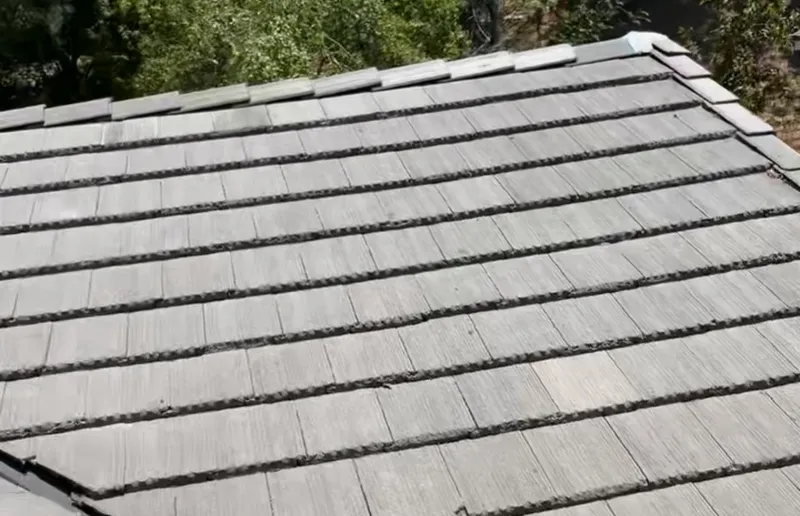
Clay and concrete roof tiles
Clay and concrete are separate tile materials. A product name can point to a look rather than the material itself.
LudoSlate is a terra cotta clay tile, even though the name sounds like slate. The Bel Air Standard and Bel Air Eaglelite tiles are concrete.
Selected tile products and their published weights
These four products come from two makers. The Ludowici LudoSlate page labels its weights per square. A square means 100 square feet of roof coverage.
Eagle's technical specifications record approximate figures for the concrete Bel Air tiles on a different basis. The Eagle weights cover installed field tile per 100 square feet with a three-inch headlap. These four are examples, so they do not describe clay or concrete tile in general.
| Manufacturer / product | Material | Published tile weight per 100 square feet | Source locus |
|---|---|---|---|
| Ludowici LudoSlate | Terra cotta/clay | 598 lb | Product technical characteristics: weight per square |
| Ludowici LudoSlate Premier | Terra cotta/clay | 676 lb | Same characteristics, Premier column |
| Eagle Bel Air Standard | Concrete | Approximately 970 lb | 2026 technical specifications, page 1, Bel Air |
| Eagle Bel Air Eaglelite | Concrete | Approximately 720 lb | Same page, Eaglelite variant |
Tile weight and the complete roof assembly
Published tile weight is not the weight of a finished roof. The whole assembly can also include attachments, underlayment, battens, the deck and other components.
These numbers cannot tell you what a structure can carry. That is a design question for the building and project in front of you. Bring the product weight into the planning for a new roof installation or a full re-roof.
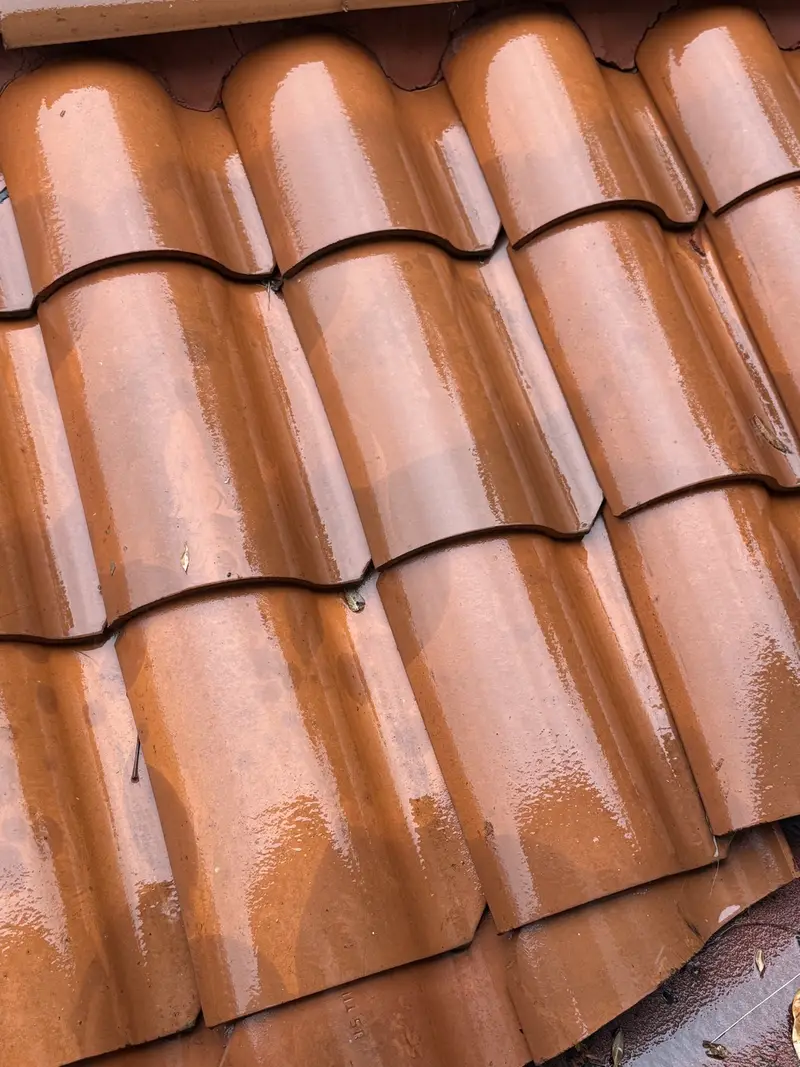
Repair, matching and tile reuse questions
We may be able to reinstall your existing tiles if their condition makes them suitable for reuse.
Condition matters beyond reuse. A buyer in escrow may want a roof inspection to verify roof condition. A detailed inspection with a written report is a paid service, separate from a free estimate.
We work on tile roofs of all types, including clay, concrete and slate, for residential and commercial buildings. Our repair work covers leaks, loose or slipped tile and flashing, including small jobs.
Repairs raise the question of matching the existing tile. Size and profile matter as you replace clay or concrete roof tiles. How tiles are made, roof age, dirt and weathering can affect a color match.
Underlayment replacement also goes by lift and relay. Not every leaking tile roof needs it. When it is the right work, we follow a set order.
Call (323) 616-1483 to discuss the clay or concrete tile on your roof.
- Lift the tile off in sections and stack it on site.
- Strip the failed underlayment down to the deck.
- Inspect the sheathing and replace what has rotted.
- Lay new underlayment.
- Restack the original tile.
Los Angeles project-information checklist
First find out who reviews building work at your address. The City of Los Angeles homeowner step-by-step guide asks readers to confirm the property sits inside the city. It also points to resources that name who is in charge.
For other addresses in Los Angeles County, the guide links to a tool to help find the right office.
Check our California license through the contractor lookup linked in that guide.
The guide says permit needs depend on how complex the project is.
We help property owners pull a required roofing permit. The reviewing authority, not a product record, settles the permit question.
- The exact product name and variant you are considering
- The published tile weight for that product, with its stated basis
- The work you have in mind: repair, underlayment replacement or full re-roof
- The authority with jurisdiction at your property
- The current condition of the tile and what sits under it
Choosing between a clay and a concrete product
Material alone will not settle this choice. Compare the named product and variant, since published weights differ inside a single clay line.
Compare the product information with the work your roof needs. We repair and replace both materials; see our clay tile roofing and concrete tile roofing pages for those services.
Our tile roofing articles cover other repair and replacement questions.
Clay and concrete tile questions
What are the disadvantages of clay roof tiles?
Judge drawbacks from the product and your roof, not from clay as a whole. Even inside one clay line, published weights differ by product. Replacing a clay or concrete tile later also raises size, profile and color questions.
What type of roof tiles are best?
The best tile depends on the exact product, your roof and your project. Check the published weight and its stated basis for each product you are considering.
Can tile roofs be repaired?
Yes, both clay and concrete tile roofs can receive localized repairs. A replacement piece needs a compatible size and profile; weathering and manufacturing differences can complicate a color match. Reusing original tile depends on the condition of those pieces.
Published weights answer one narrow question about a single product. Ludowici and Eagle state theirs on different bases, so read each figure with its basis attached.
Tile Roofing Los Angeles is a division of Home Vision Remodel.
(323) 616-1483