
Neither covering wins on its own. The decision turns on what sits under your current roof, which exact product you pick, and who reviews the work. Start with the roof you already have.
Two layers under the covering shape that decision. Underlayment is the waterproof layer beneath tile or shingle. Decking, also called sheathing, refers to the structural boards under the roof covering.
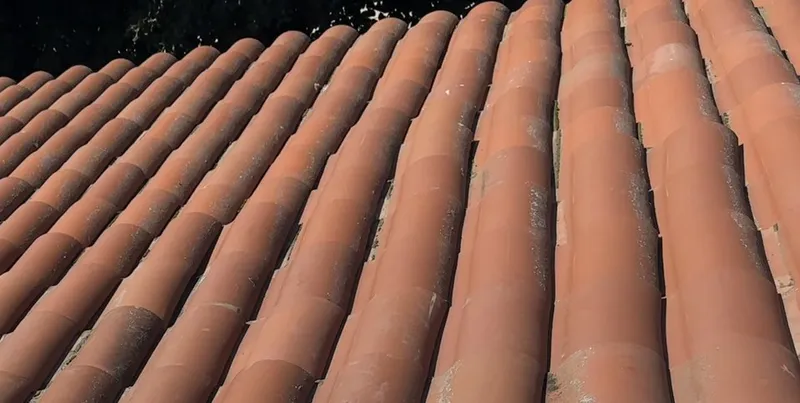
Tile and shingles for an existing Los Angeles roof
On an existing home, the first question is what stays and what goes. Tile roofs can keep the original tile, when its condition allows. Asphalt shingle projects can run as repairs, patches or a full replacement.
Tile is a family of products rather than one material. We work on tile roofs of all types, and a proposal should name which one it means. Within tile, clay and concrete roof tiles are distinct material options, and slate is a third.
Asphalt shingle is a different product. Asphalt shingles consist of asphalt and a reinforcement layer coated with mineral granules. We repair shingles and flashing, and our asphalt shingle roofing work covers full replacement and re-roof.
Existing condition and the proposed change
You may be able to keep your tiles and replace the underlayment beneath them. A change of material is a different job. Switching from tile to shingles, or from shingles to tile, means replacing the covering itself.
What you can reuse changes with that choice, and so does the scope. Your written proposal should show which of the two it covers.
If you change from tile to shingle, the original tile does not go back on. Where that tile ends up belongs in the written scope. Either project depends on what sits below the covering.
Your roof has three parts to ask about: the covering, the underlayment beneath it, and the decking below that. Each part has its own present condition. Underlayment can fail while the tile above it stays suitable for reuse.
That layer can belong to either project. A shingle re-roof may replace the underlayment or only the shingles.
Underlayment replacement on a tile roof is also called a lift and relay. It keeps the tile you already own, and the look it gives, when that tile is suitable for reuse. The underlayment does the waterproofing, so the tile has to move before anyone replaces it.
Rot shows up in the boards under the covering. When we lift tile to replace underlayment, we repair bad decking before the tile goes back on.
The work runs in a set order:
- Lift the tile off in sections and stack it on site.
- Strip the failed underlayment down to the deck.
- Inspect the sheathing and replace what has rotted.
- Lay new underlayment.
- Restack the original tile.
Inspections of the roof you have now
A detailed roof inspection with a written report is a paid service, separate from a free estimate.
Two other situations put a roof inspection on the table. A buyer in escrow orders one to verify the condition of the roof. The other comes from an insurer, which may ask for one before it renews or writes coverage.
We handle both of those inspections. Each one looks at the roof you have now, not the one you are considering.
Roof product ratings and cooling considerations
Cool roof products exist in both the shingle and tile categories. The material category alone does not settle a product's radiative performance. What matters is the exact product and color a proposal names.
Two properties matter to cool roof performance. Solar reflectance concerns sunlight reflected away, while thermal emittance concerns the release of absorbed heat.
Read both properties together for the product you are considering. Lighter colors are generally more reflective, but color alone does not establish solar reflectance performance. Pair the product data with the ENERGY STAR page on cool roofs before you settle on a covering.
The Cool Roof Rating Council publishes a directory of rated roof products. Its search covers product type, color, manufacturer, product name and performance parameters. One rating does not cover every tile or every shingle.
Search the directory by the manufacturer, product name and color in your proposal. Without those details, you cannot match a proposal to a specific listing.
Those listings separate initial ratings from three-year-aged ratings, with solar reflectance and thermal emittance in both forms. Aged figures describe the product after three years.
Compare the same rating field across both products. Pairing an initial figure for one product with an aged figure for the other is not a comparison.
A rating describes radiative performance, not a ranking or an approval. A directory listing also says nothing about code compliance or availability. Actual effects on a building can vary.
Los Angeles publishes green building and sustainability guidance for projects in the city. Check the current version for the product you plan to install. Read it with the product data, not in place of it.
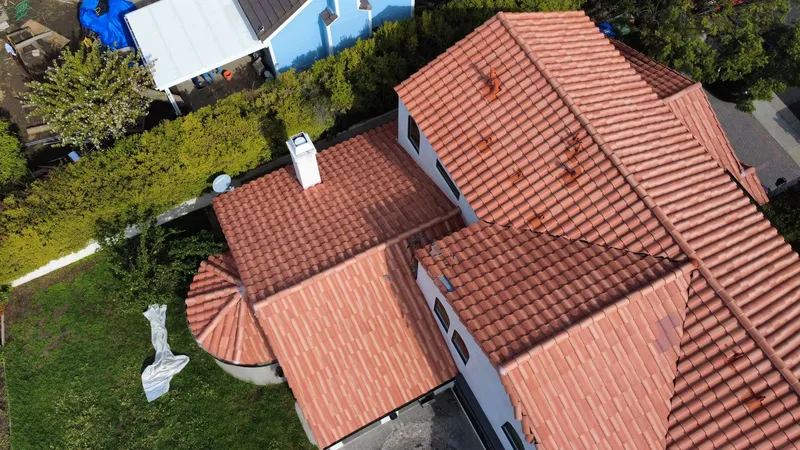
Repairability and project scope
Both coverings can be repaired. What changes is the work each repair takes.
We handle roof repair, including small jobs. That covers leaks, loose or slipped tile, shingle patches and flashing. A leak repair and a full re-roof are different scopes, and we do both.
The same symptom can lead to a repair on one roof and a replacement on another. Condition under the covering shapes the scope. The material name does not decide it.
Ask whether a proposal strips the roof to the deck or lays the new covering over the old. Roofers call the first route a tear-off. The answer tells you whether the job includes new underlayment.
A complete scope names the covering, the underlayment and the existing deck together. Naming only the top layer leaves the rest of the assembly open. A proposal should say how it handles boards that turn out to be bad.
Cost follows the scope of the work. Several details of the building and the roof change the work involved.
Roof area in squares, the number of stories and the pitch set the baseline on either material. Rot under the covering and the number of existing layers change it further. On a tile roof, lifting the tile off and setting it back counts as work of its own.
Two proposals for the same house can cover different amounts of work. Ask each one to name these items for the covering it proposes.
Call (323) 616-1483 for a free estimate on the roofing work you are considering.
Los Angeles review and next steps
Your project follows the authority that covers your address. The city's step by step project guide walks through the stages of a building project. It covers zoning, documentation, permits, payments and inspections.
Those stages describe the city's process, including inspections. A roof condition report you order is a different service.
An address in Los Angeles County is not necessarily within the City of Los Angeles’s building jurisdiction.
Which documents apply depends on how complex the project is, the guide's documentation section says. Choosing tile or shingle does not answer that on its own.
Outside the City of Los Angeles, another authority handles that review. Whether your project needs a permit is a question for that authority.
We help property owners pull the required roofing permit from the city or other authority with jurisdiction. Approval rests with that authority.
The guide also links to California’s contractor license lookup, so you can check the license on your proposal.
Comparing a tile scope with a shingle scope
Compare proposals on the scope each one spells out. When a proposal stops at the material name, the scope is incomplete.
Written answers let you set two proposals side by side. Keep the same questions for tile and for shingle. If you are past comparing and ready to replace, the next step is roof replacement.
Take these questions into every conversation about the work:
- Is the work written as a repair or a full re-roof?
- Does the scope include new underlayment, or only the covering?
- Does the scope name the flashing work?
- Which tile goes back on, and what happens to tile that is not suitable?
- Which tile type does the work involve: clay, concrete or slate?
- How does the proposal handle sheathing that has rotted?
- Does the work strip to the deck, or go over the existing covering?
- Which product and color does the proposal name?
- Which rating fields are published for that product, initial and aged?
- Who pulls the permit, and which authority reviews the work?
- Which contractor license number appears on the proposal?
- Is a detailed inspection report included, or billed separately?
Tile and shingle questions
What is the best roof to have on your house?
No single roof is best for every house. The right one depends on your covering, the condition underneath it, and the exact product you pick. Suitable tile can go back on over new underlayment, while shingle work runs as repair, patching or full replacement.
Do tile roofs keep a house cooler?
The ratings that matter depend on the product, not the category. Cool roof products exist in both categories, so the exact product and color carry the ratings. Check solar reflectance and thermal emittance for the named product, and note that actual building effects can vary.
What are the disadvantages of tile roofs?
Tile adds handling work when the waterproof layer underneath needs replacement. Removing and restacking pieces affects scope, and only suitable tile can return. Compare those requirements with the proposed shingle work, including underlayment, flashing and any deck repairs.
A roofing proposal should explain more than whether it uses tile or shingles. It should also describe the underlayment, decking work and permit responsibilities included in the job. Our other tile roofing guides cover clay versus concrete tiles and underlayment replacement.
We work in Los Angeles, Santa Monica, Culver City, West Hollywood, Beverly Hills and Burbank. Our roofing estimates are free, so you can bring these questions to us. A detailed inspection report is a separate paid service.
Tile Roofing Los Angeles is a division of Home Vision Remodel. CSLB #1112525.
(323) 616-1483