
The first question on a damaged tile roof is how far the work has to go. Call (323) 616-1483 and describe what the roof is showing, inside and out.
We can remove suitable tiles and reinstall them over new underlayment. This keeps the existing covering while replacing the worn layer beneath it. We check the surrounding roof to see whether that work is enough.
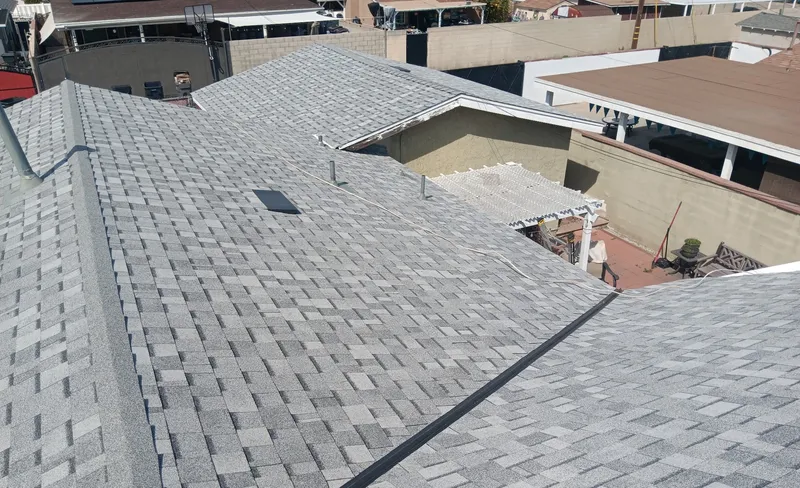
Repairing a damaged tile roof
Repair starts at the damage you can point to and grows from what we find around it. We fix leaks, loose or slipped tile, shingle patches and flashing, including small jobs. Our roof repair covers tile of all types.
A leak inside the building does not identify its own cause, because tile, flashing and underlayment can each contribute. The scope of a repair comes from the affected roof detail, not from where the leak shows inside.
The broken tile marks the starting point, and the tile around it can matter just as much. Neighboring pieces can be cracked or sitting out of position. Those pieces can widen the repair beyond the one tile you spotted.
Not every tile problem sits in the open part of a roof. Some sit where the roof meets a wall, a chimney or a valley, and metal flashing seals those transitions. A repair at one of those points has to account for that metal, not the tile alone.
Underlayment is the waterproof layer beneath tile or shingle, and its condition separates localized work from broader work. A narrow repair suits damage that stays inside one area, with sound underlayment surrounding it. Where that layer has failed across a wider run, replacing the tile above it does not reach the problem.
What you can see helps us scope the work. Note where water shows inside and how many spots you have found. The tile type helps as well, whether it is clay, concrete or slate.
What remains after a localized repair
A repair fixes the agreed area; it does not confirm the condition of the rest of the roof. Reviewing and documenting the whole roof is a separate service from a repair estimate.
A small repair may reveal damage beyond the original work area once tiles are lifted. That could mean replacing more underlayment or discussing a full replacement. We assess what is exposed before recommending further work.
Underlayment replacement and tile reuse
Underlayment replacement targets the layer under the tile rather than the tile itself. That work is also called lift and relay, because the tile comes off and then goes back on. That covers clay, concrete and slate tile.
Below the underlayment sits the decking, also called sheathing, the structural boards that sit under the roof covering. We see those boards when the tile and underlayment come off.
That is when we check the sheathing and repair bad decking as part of the same job. Boards that have rotted come out before the new underlayment goes down.
Reuse depends on the condition of the tile itself. We check the tile before it goes back on, and what is not suitable stays off the roof. That check happens once the tile is off and stacked on site.
The tile goes back on last. Stripping runs down to the deck first, so the failed layer does not sit under the new one. New underlayment covers the deck before we restack any tile.
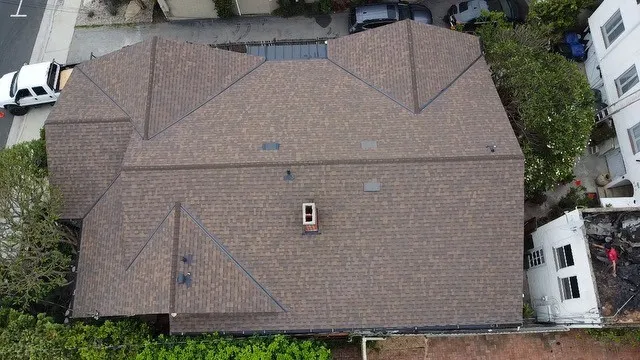
Roof inspections for a sale or an insurer
We handle roof inspections as well as repair and replacement work, and two different situations bring that request.
An insurer may ask for an inspection before it writes or renews a policy. A buyer in escrow has a different reason, which is confirming what shape the roof is in.
An escrow check and an insurer's request are not the same ask. Tell us which one you need when you call, and what the request covers.
A detailed inspection with a written report is a separate paid service. Our estimate for roofing work is free, and the two answer different questions about the roof.
Planning a larger reroof in Burbank
Full roof replacement is a route we weigh when problems run across the roof instead of one detail. A planned change of covering points the same way, while age on its own does not settle the question.
A lift and relay reuses suitable existing tile and replaces the layer underneath it. A full replacement changes the covering itself. We base that choice on the condition of the tile, the underlayment and the decking.
Tear-off means stripping to the deck rather than overlaying a new covering on the old. Stripping that far puts the sheathing in view, the same way a lift and relay does.
A full roof replacement carries a 10-year workmanship warranty. That warranty applies to full replacement, not to repairs or to every service we offer. Call (323) 616-1483 when you want a replacement scoped, and the estimate is free.
Permits and city inspections
Removal and covering work at reroof scale raises the permit question. Burbank's building permit resources list reroofing as Tier 1 permit work. A small repair and a full reroof are not the same request.
The city calls a Tier 1 repair or maintenance permit a streamlined submittal that does not require plan check. Permit help is part of the roofing work we take on. We help property owners pull the required permit from the city or another authority with jurisdiction.
Approval, timing and cost stay with that authority, and so does the decision on whether your project needs a permit. Which tier applies to your project is the city's call as well.
Burbank treats building inspections as part of permitting. The city says an inspection can be requested, reviewed or canceled through its Online Permits system. Scheduling uses the permit number and confirms the job-site address.
Keep the permit number on hand once the city issues a permit. Call (323) 616-1483 and we can talk through the permit side of the work.
What sets the scope of an estimate
An estimate follows the scope of the work, and your roof sets that scope. A few plain facts about the building and the covering shape what the job involves.
Roof area is one of them, measured in squares, and the number of stories is another. Pitch, meaning how steep the roof is, counts too.
A deck can already be carrying more than one covering, and a tear-off strips all of it. A relay handles the same tile twice, once off the roof and once back onto it.
Rot under the covering counts as well, and it turns up once the covering comes off. You do not need exact measurements before you call. A description of the building and the damage gives us a starting point.
We do this work on houses and on commercial buildings. Repair, underlayment replacement, full replacement and roof inspections are open to both. Clay, concrete and slate tile are all part of what we handle.
Tile roofing FAQ
What's the average cost of a tile roof?
There is no average worth quoting, because the cost of a tile roof follows the scope of the work. Roof area in squares, the number of stories and the pitch, or steepness, all shape that scope. Existing layers on the deck matter as well, and rot under the covering changes what the job involves.
Can tile roofs be repaired?
Yes, but the damage around a broken tile matters too. Adjacent pieces may have moved or cracked, widening the repair beyond the defect you first noticed. Repairing that area leaves the rest of the roof unchanged.
What does a roof inspection include?
A condition inspection examines the roof beyond the single detail covered by a repair estimate. Its written report documents the findings for your request, such as escrow or insurance renewal. Tell us who needs that report and what they require it to address.
Call (323) 616-1483 with the address and what you have found on the roof. The estimate for the work is free. The contact page works if you would rather put it in writing.
Repair, relay and replacement run the same way in Glendale, West Hollywood and Beverly Hills as they do here. We cover those cities and the rest of our service areas across Los Angeles.
Tile Roofing Los Angeles is a division of Home Vision Remodel. Our California license is CSLB #1112525.
(323) 616-1483